How smart sensors are transforming factory operations
Discover how digital sensors help industrial companies cut costs, boost quality and stay competitive in the age of Industry 4.0.
 Jean-Michel Gaudron
28/05/2026
For years, a mid-sized Luxembourg manufacturer of precision components relied on manual checks and scheduled maintenance to keep its production line running. Equipment failures were costly, quality inconsistencies were difficult to trace and energy consumption was rarely questioned.
Then came the integration of digital sensors... and operations changed fundamentally!
This is not an isolated story. Across Europe, industrial companies are discovering that sensor technology is one of the most accessible and highest-impact entry points into digital transformation. Understanding the types of sensors available and the business outcomes they enable is the first step towards making that shift.
The four sensor types every manufacturer should know
Not all sensors work the same way. Choosing the right combination depends on production environment and business objectives.
- Physical sensors - They measure tangible quantities directly: temperature, pressure, vibration, flow rate. They are the foundation of any monitoring system on the factory floor.
- Software sensors - They process the data captured by physical sensors to surface patterns, trends and actionable insights that raw numbers alone cannot reveal.
- Virtual sensors - They use mathematical models to simulate conditions and generate predictions, even in areas where physical measurement is impractical or too costly.
- Smart sensors - They combine sensing, data processing and wireless communication in a single device, enabling real-time, intelligent analysis without heavy infrastructure investment.
Used in combination, these four types create a comprehensive digital nervous system for a factory.
Three challenges digital sensors solve in practice
1. Unplanned downtime
In the precision components case above, vibration and temperature sensors were installed on critical machinery. Within weeks, the system detected irregular patterns on a key milling unit, days before a mechanical failure would have occurred. Maintenance was scheduled proactively, avoiding an estimated 18 hours of unplanned stoppage.
Across industries, this is one of the clearest returns on sensor investment: early anomaly detection extends equipment lifespan and dramatically reduces emergency repair costs.
2. Inconsistent product quality
Quality control has traditionally relied on end-of-line inspections, catching defects after the fact. Real-time sensor data changes this entirely. By monitoring process parameters continuously, manufacturers can identify the precise moment and condition that causes a deviation, then correct it before defective units accumulate.
The result is not just fewer rejects, but a traceable, auditable quality record that strengthens relationships with demanding customers and supports regulatory compliance.
3. Resource and energy waste
Sensors tracking compressed air, water and electricity consumption reveal inefficiencies that are otherwise invisible. In one typical scenario, a manufacturer discovered that 20% of its compressed air supply was lost to undetected leaks, a finding that led to rapid repairs and measurable energy savings.
Accurate resource monitoring also supports sustainability reporting, an increasingly important requirement for companies operating within European supply chains.
What manufacturers are achieving: the results in brief
- Reduced operational costs through optimised energy use and less waste;
- Higher production output driven by automation and continuous process monitoring;
- Longer machinery lifespan thanks to proactive, data-driven maintenance;
- Stronger compliance posture with automatic logging of safety and environmental parameters;
- Better strategic decisions grounded in reliable, real-time operational data.
The competitive case for acting now
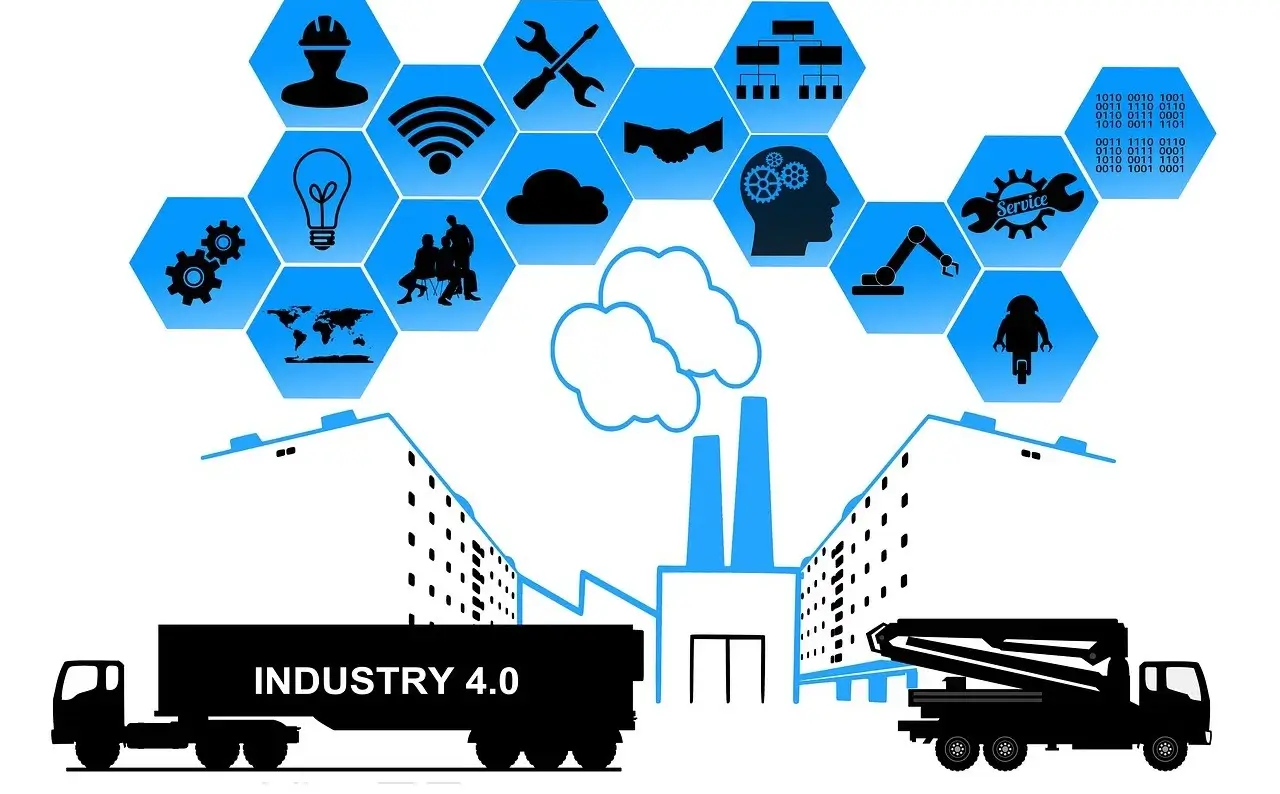
The gap between companies that have embraced sensor-driven operations and those that have not is widening. Industry 4.0 is no longer a vision: it is a market reality. Manufacturers who delay digitalisation risk falling behind on cost efficiency, sustainability standards and customer expectations simultaneously.
The good news is that entry points exist at every scale. A targeted sensor deployment in one production area can generate measurable results within months, building the business case for broader investment.
Ready to take the next step?
The Luxembourg Digital Innovation Hub (L-DIH) supports industrial companies in identifying the right digital technologies for their specific needs — including sensor integration, data infrastructure and connected manufacturing solutions.
Read our latest articles on industrial digitalisation or contact the L-DIH team to explore how your company may benefit from tailored advisory services and funding opportunities.